Signs of Rodents in Walls and Attics
Most homeowners don’t find out they have a rodent problem by spotting one in the kitchen. They find out when the drywall looks chewed, the attic insulation is shredded, or an electrician pulls back a panel and finds damage that’s been building for months. And by that point, the eventual repair bill has begun to pile up.
If you suspect something is living inside your home but can’t confirm it, don’t be afraid. This guide from the experts at Greenix Pest Control covers the key signs of rodent infestation to watch for, including what rodents in walls and attic spaces actually look and sound like, so you can respond before a potential problem gets out of hand.
Why Rodents in Walls and Attics Are So Hard to Catch
Walls and attics give rodents everything they need: warmth, nesting material, and low foot traffic. Insulation muffles sound, darkness hides damage, and nocturnal behavior keeps them active while you’re asleep. A family of mice can settle into an attic corner and go completely unnoticed for weeks.
Most rodent infestations grow well past the “easy to fix” stage before anyone catches on, and unless you’re constantly checking, they can sneak in without you noticing. This is exactly why knowing the warning signs matters.
The Most Common Signs of a Rodent Infestation
Rodents are good at staying hidden, but they’re not completely invisible. The signs below won’t always be obvious, but if you know what to look for, you can catch a problem before it spirals out of control. Sounds, physical evidence, and structural damage each tell part of the story.
Sounds You Shouldn’t Ignore
Scratching, scurrying, and gnawing sounds inside walls or above the ceiling are classic indicators of rodents in walls or rodents in attic spaces around your home. These sounds are most noticeable late at night or just before dawn, as that’s when rodents are most active.
Homes make noise on their own, like pipes knocking or wood contracting, but rodent noise is different. It moves, it’s irregular, and it has a distinct chewing or skittering quality that settling doesn’t replicate. If the sound stops when you tap the wall, that’s worth paying attention to.
Droppings, Tracks, and Other Physical Evidence
Rodent droppings are small, dark, and tapered, and are often mistaken for insulation debris or dirt. They show up in clusters along baseboards, near entry points, and in attic corners. Look also for grease marks along the base of walls, shredded nesting material, and small footprints in dusty areas. These are reliable signs of rodent infestation that most people walk right past.
Gnaw Marks and Structural Damage
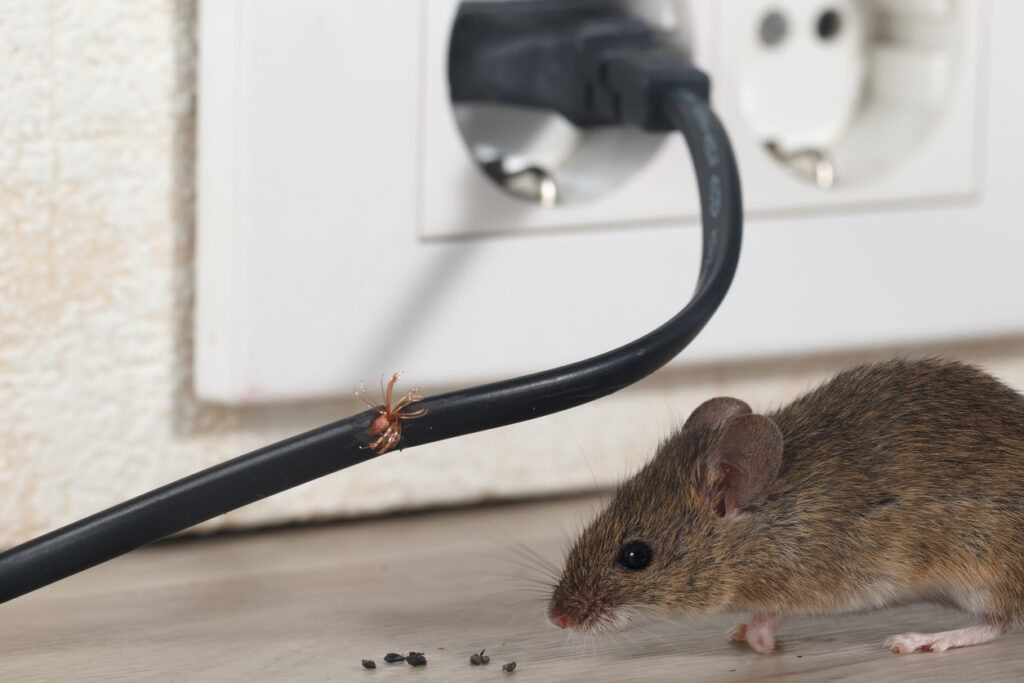
Rodents chew constantly because their teeth never stop growing, which means wood framing, plastic pipes, and electrical wiring are all easy targets. Fresh gnaw marks look light and rough, while older ones darken over time. Chewed wiring is the sign that should concern you most. It’s a documented fire hazard, and it’s not always visible without opening a wall.
Rodents in the Attic: What To Look For Up There
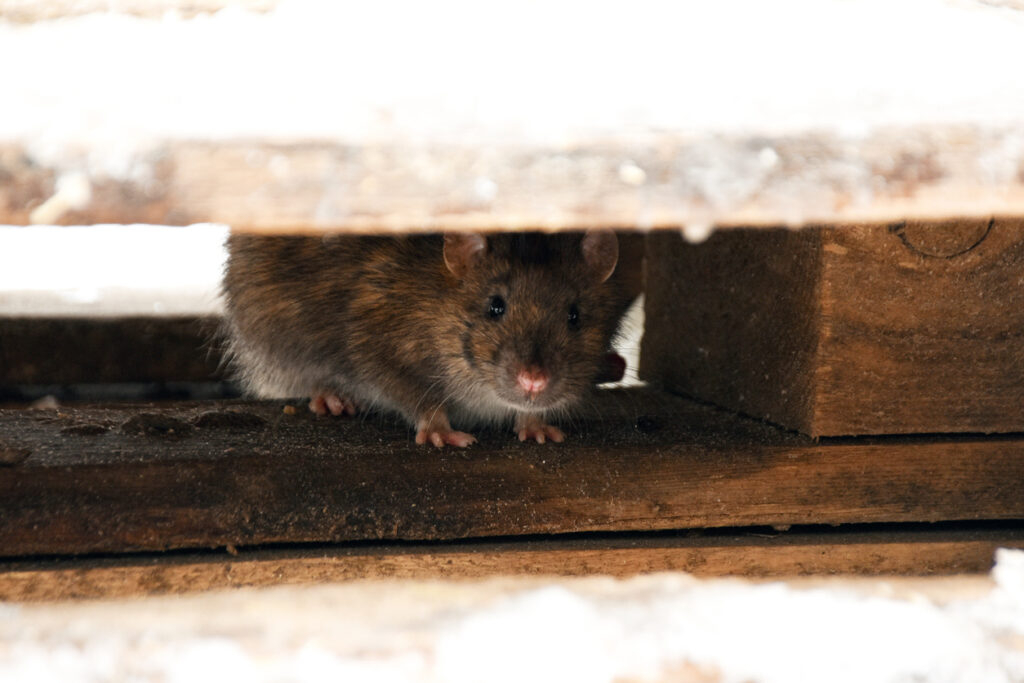
Attic infestations leave a more concentrated footprint since rodents rarely get disturbed up there. During a visual check, look for:
- Insulation disturbance. Look for areas that have been pulled apart or compressed in specific spots.
- Nesting material. Shredded insulation, fabric, or plant material piled together is a reliable sign of activity.
- Ammonia odor. A strong smell from urine buildup often means rodents have been up there a while.
- Entry point staining. Dark smudging near soffit vents or roofline gaps indicates a frequently used access point.
- Clustered droppings. Droppings concentrated in corners rather than scattered evenly point to established travel paths.
Rat Infestation vs. Mouse Infestation: Does It Matter?
Yes, the difference matters. Mice spread out quickly and are easier to address early. Rats cause more concentrated structural damage and are harder to trap because they’re wary of new objects in their environment. A rat infestation in house settings also tends to be more established by the time it’s discovered, which means more exclusion work and a longer resolution process.
Specific Signs of Rat Infestation
Rat droppings are noticeably larger, roughly about the size of a raisin, and blunt at both ends. Gnaw marks are deeper and more aggressive. Grease trails are more pronounced along walls and baseboards. Entry points tend to involve real structural damage, since rats need at least a half-inch gap to squeeze through.
How To Get Rid of Rodents in Walls and Attics
DIY attempts to get rid of rodents in walls rarely work as planned. Traps placed without knowledge of travel paths get ignored. Sealing entry points before all rodents are removed can trap animals inside, which creates a different problem once they die. Knowing how to get rid of rats in walls or how to get rid of rat infestation issues in attics requires understanding the full problem, not just the visible signs.
Professional rodent control treatment covers what DIY can’t, with advantages including:
- Accurate species ID. Knowing exactly what you’re dealing with determines the right removal strategy from the start.
- Strategic placement. Traps and bait are positioned based on actual rodent activity, not guesswork.
- Attic remediation. Hidden nesting damage and contaminated insulation get assessed and addressed.
- Follow-up visits. A return inspection confirms nothing was missed and the issue was addressed properly.
When To Call for Professional Rodent Control Services
If you’ve set traps, sealed what you can find, and still come across activity or signs of damage, it’s time to invest in professional rodent pest control. Pest control for rodents and mice becomes significantly harder the longer it goes unaddressed, and wall and attic infestations will never resolve themselves on their own.
Get Expert Rodent Pest Control From Rove Pest Control
The longer a rodent infestation goes unaddressed, the more it costs in damage, in remediation, and in peace of mind. Early action is almost always simpler and cheaper than dealing with a problem you let grow in the background.
The expert team at Greenix Pest Control is ready to help. If something in your walls doesn’t sound right, give us a call or contact us online for a free estimate! We’ll take it from there.